 The one that started it
LiTa Bath and Beach chair
Safe in the bath, and light enough to carry down to the sea. The chair Thelita was in the day everything changed, redesigned so it could not happen again.
In development. Not yet for sale.
LiTa chairs support children with brain injuries and movement difficulties, so they can be in the water, in the room and in the middle of things with everyone else.
Freedom to Move. Freedom to Participate.
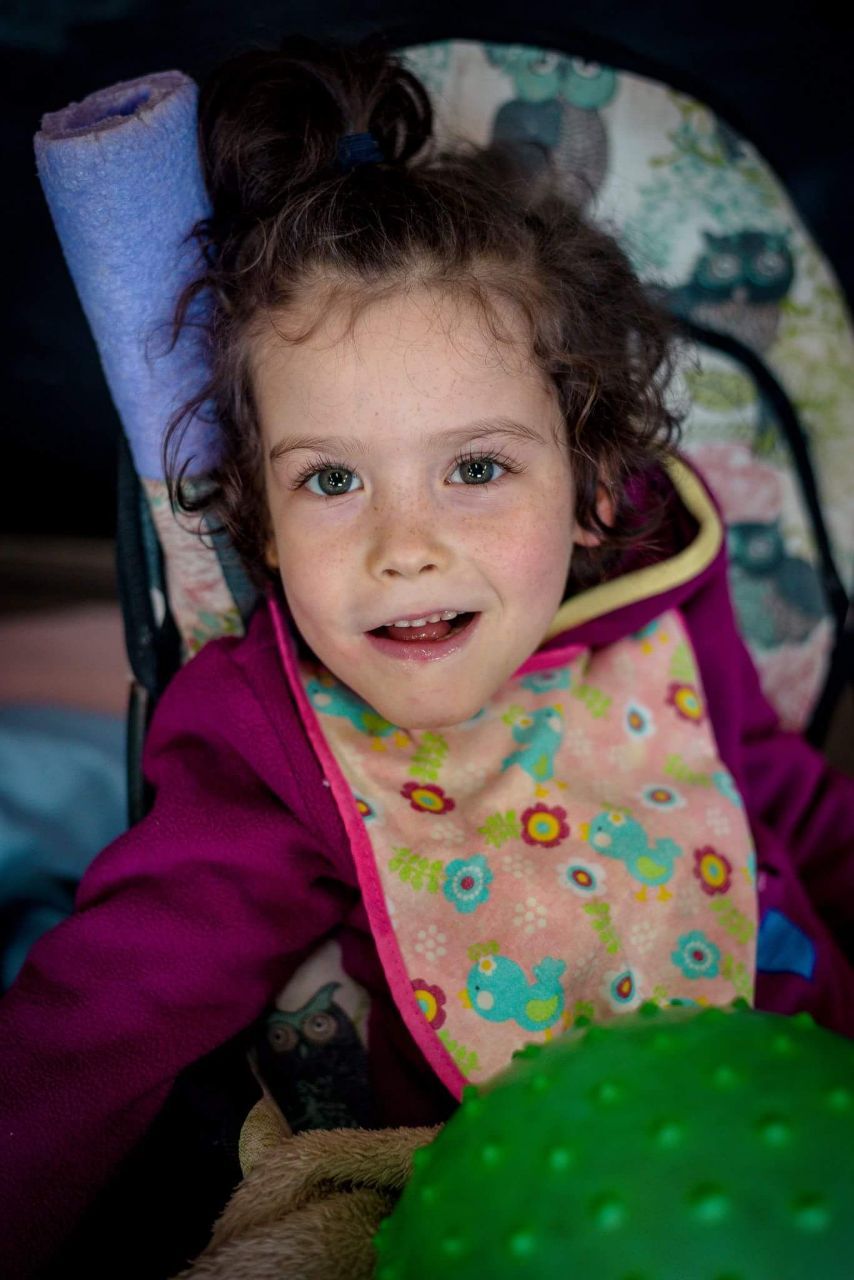
Most chairs for children like ours are built to hold a child in the correct position and keep them there. Boxed in. But a child who feels boxed in fights the chair, and a child who is fighting the chair is not swimming, not playing, and not learning anything.
LiTa chairs work with a child's movement instead of against it.
"Where have you found this LiTa chair? Why don't I know about it?"
How it works
A child who feels boxed in fights the chair. These hold a child steady while leaving them free enough to relax, play and take part.
Up the stairs, into the car, down to the sea. Most chairs are too heavy for one adult, so children end up left on a bed in another room. We will publish the weight of each chair once testing is done.
Cost is the reason most families go without. Bringing the price down is a design goal, not an afterthought. There is no price yet, and we will say so plainly until there is.
Her cousins run to jump into the rocking chair. A chair other children queue for does not mark a child out as different. It is furniture everybody wants a turn in.
Wipe it and carry on. If food gets underneath, lift your child out, brush or wipe it, and it dries in seconds.
"It worked for us. It relieved my frustrations. It made life lighter."
The chairs
Each of these three does the same job in a different place: hold a child safely, without them feeling held.
The one that started it
Safe in the bath, and light enough to carry down to the sea. The chair Thelita was in the day everything changed, redesigned so it could not happen again.
 Cumfy
Cumfy
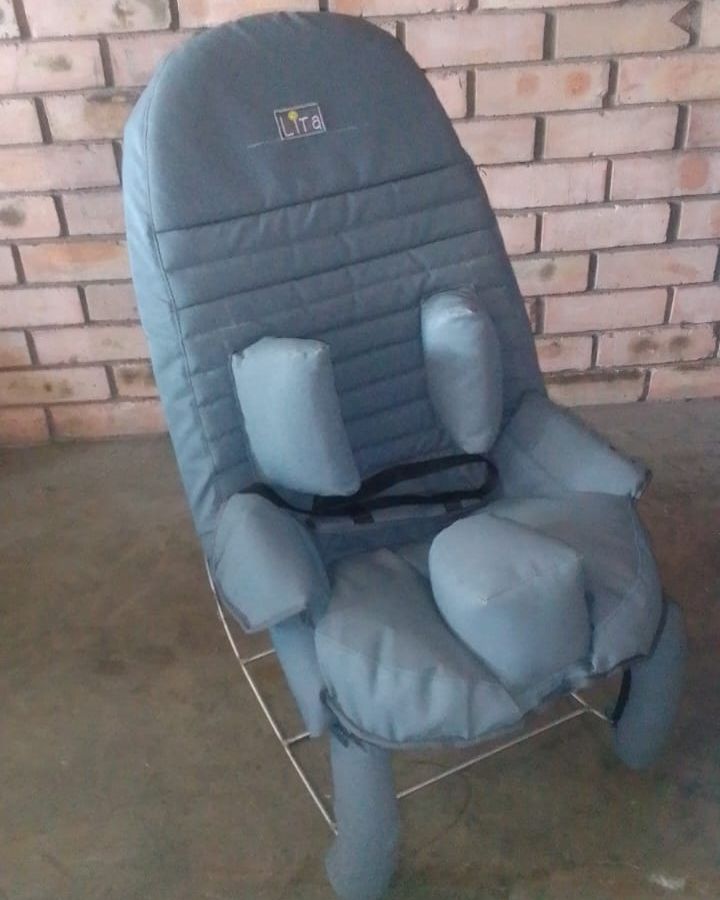
Thelita needs to be positioned properly, but if she notices she is being positioned she fights it. The Cumfy chair rocks, so there is movement, and she relaxes and joins in without noticing. The family relaxes too. And she is not on the floor, where she can be stepped on or twist into a position that hurts her.
 Practice
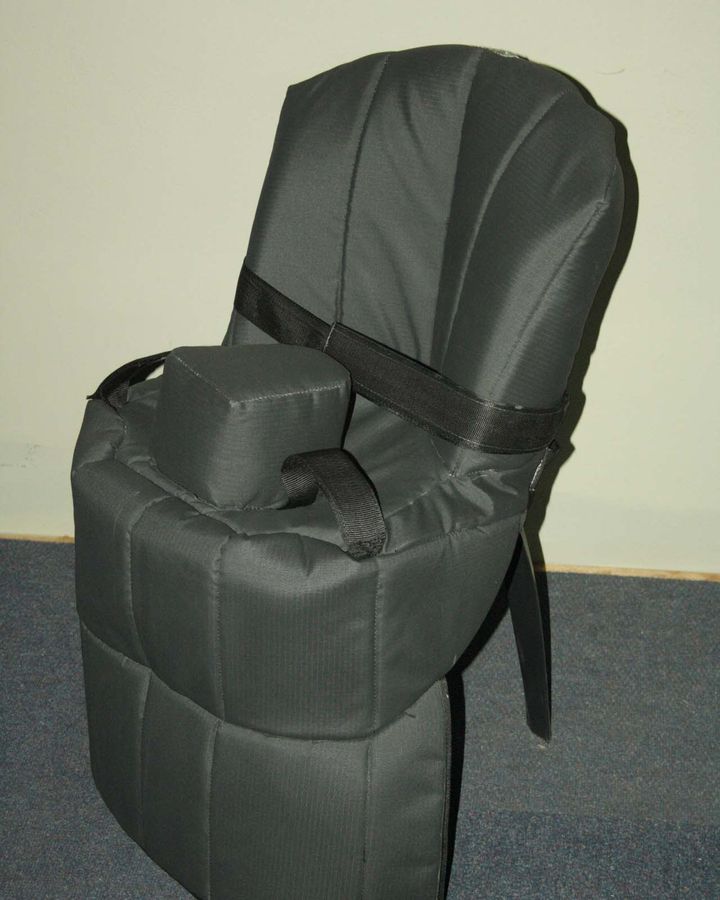
For the daily practice and therapy that has to happen at home. More about this one soon.
"Love the fact that they look comfortable."
Adult supervision required at all times.
Parents and carers of children with brain injuries, and not only children with movement disorders. The chairs were made for children with cerebral palsy and dystonia. We think the calming effect may help other children too, including children who are blind, children with Down syndrome and some autistic children. That is a hope until more families have tried it, and we will tell you what we learn.
I picture a mother at my centre. She is tired and trying to survive the day. Her child needs practice and the right equipment, and everything is either too expensive or too heavy to carry. She does not want to leave him alone on the bed in another room, but she is one person and she cannot be in two places. The bath chair does not work. She is not sure what will work. She feels hopeless.
That is who we are building for.
If you are not sure whether a chair suits your child, ask us. If it is not right for your child, we will tell you.
Our story
I had forgotten the towel, and there was nobody to help me. I left Thelita in her bathing chair for the few seconds it takes to fetch one. When I came back she had slipped, and she was holding onto the chair with one hand with her nose just above the water.
She wanted to live. It touched my heart, and I knew I had to redesign that chair and make it safe.
She has always loved the water. I used to carry her down to the sea and back, because everybody else was playing and she had to sit and watch. One day I took the bath chair to the beach instead, and it worked. She was in the water, with everyone, having fun.
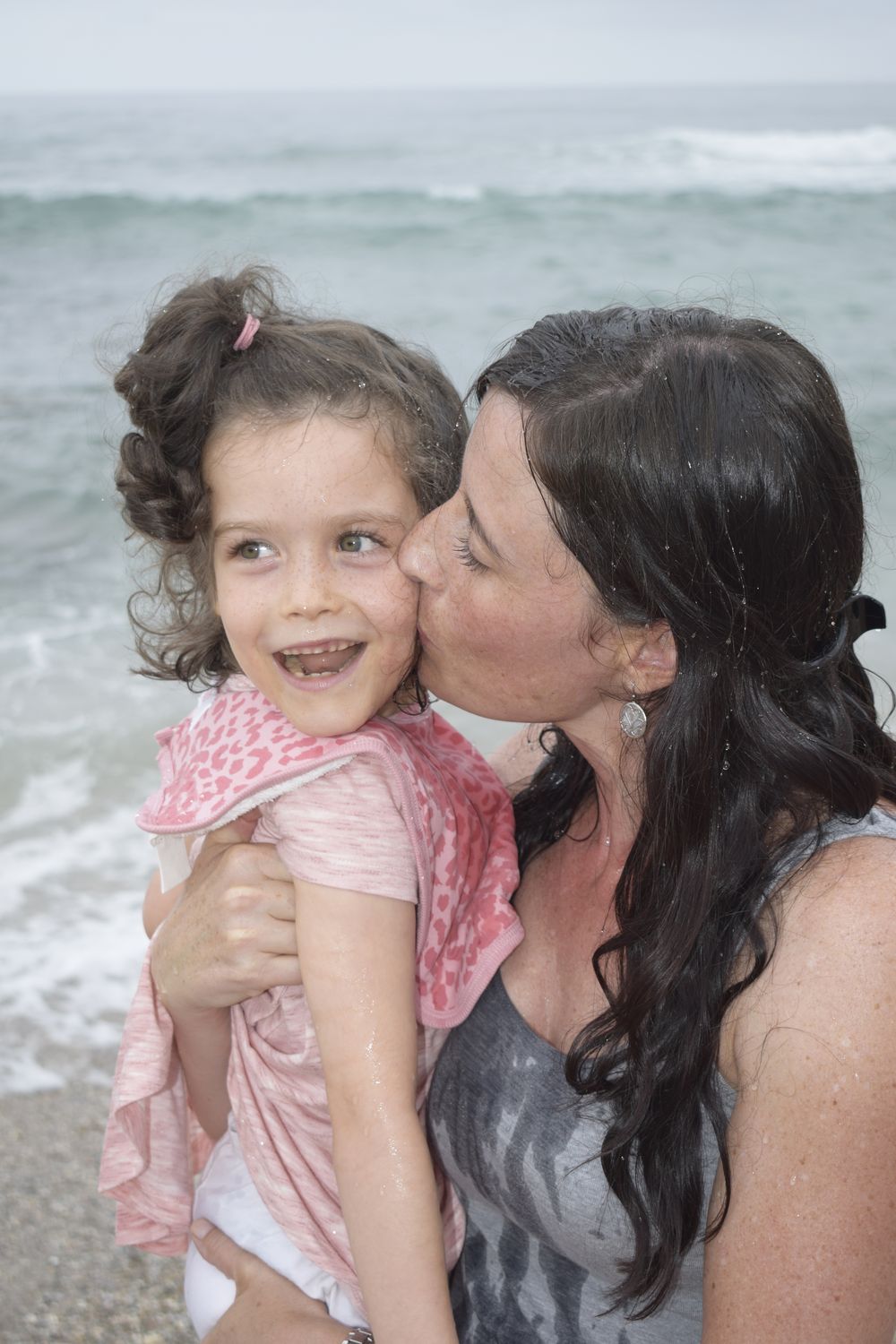
A LiTa chair is not a substitute for you. Never leave a child alone in or near water, not for a moment, not to fetch a towel. These chairs are built so that a moment like ours does not become something worse. They are not built so that the moment is safe.
The names
The chairs are named after my second born, Thelita Barnard. I have always called her Lita. Every one of these chairs exists because I was trying to position her properly, and could not find anything that was not restrictive, heavy or far too expensive.
Purple is her favourite colour. That is why it is ours.
The company is THREEL, from three Afrikaans words: Lig, Liefde, Lewe. Light, Love, Life.
Our name says where we draw our strength from. It has never been a condition of anything we do. LiTa is for every child and every family.
The first thing therapists ask is who helped make these. The honest answer: they were designed by a mother, and first built through trial and error by her cousin's upholstery business. The next step is making them properly, with an established manufacturer.
There is no specification sheet yet, because the chairs are still being tested. If you would like one when it exists, or would like to try a chair with a client, choose "Therapist or clinician" on the form.
Register your interest
All three LiTa chairs are prototypes. We are not taking orders and we cannot promise a date yet. We would rather say that plainly than take your money for something that is not finished.
What helps most right now is hearing from the families and therapists who would actually use them.
Your details are with us, and we will be in touch when there is something worth telling you.